

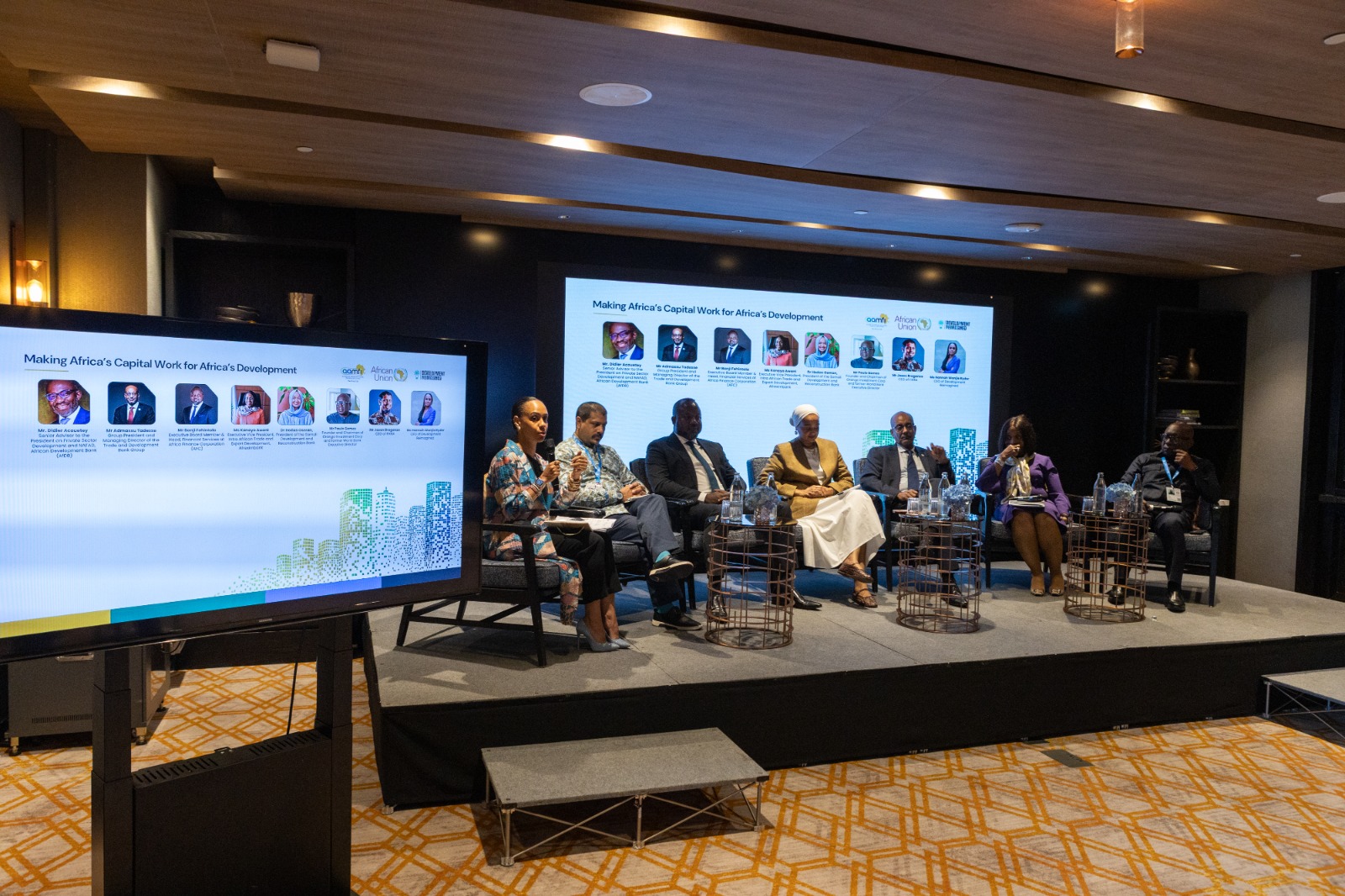
On 15 October 2026, on the sidelines of the IMF and World Bank Annual Meetings in Bangkok, the Alliance of African Multilateral Financial Institutions (AAMFI), the African Union (AU), and Development Reimagined (DR) convened a high-level panel discussion titled “Making Africa’s Capital Work for Africa’s Development.” The event marked the launch of AAMFI’s inaugural report, Strengthening the African Financial Architecture, and examined how greater mobilisation of African capital, improved impact measurement, and the strategic alignment of AAMFI members’ financing, with a combined balance sheet of over US$85 billion, can deepen these institutions’ contribution to Africa’s development.
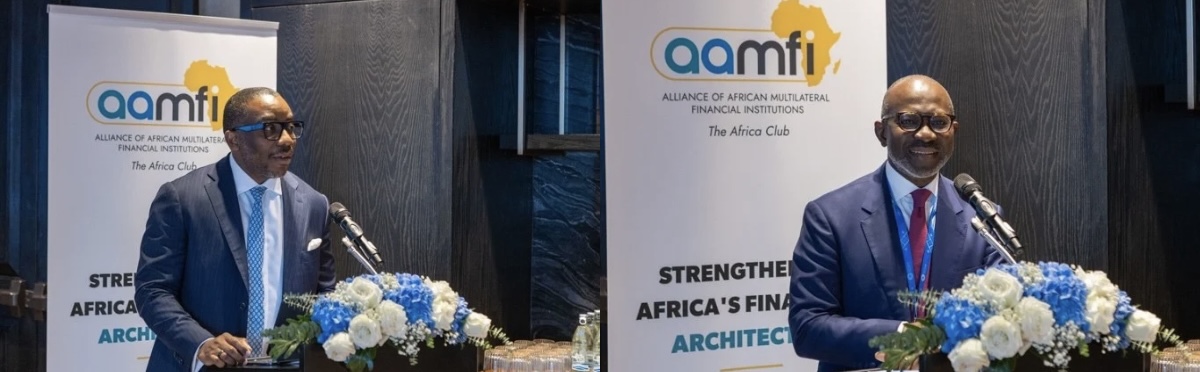
Mr Babajide Sodipo, Acting Executive Secretary of the Alliance of African Multilateral Financial Institutions (AAMFI) gave welcoming remarks, and Mr Didier Acouétey, Senior Advisor to the President on Private Sector Development and the New African Financial Architecture for Development (NAFAD), at the African Development Bank (AfDB), delivered the opening statement.
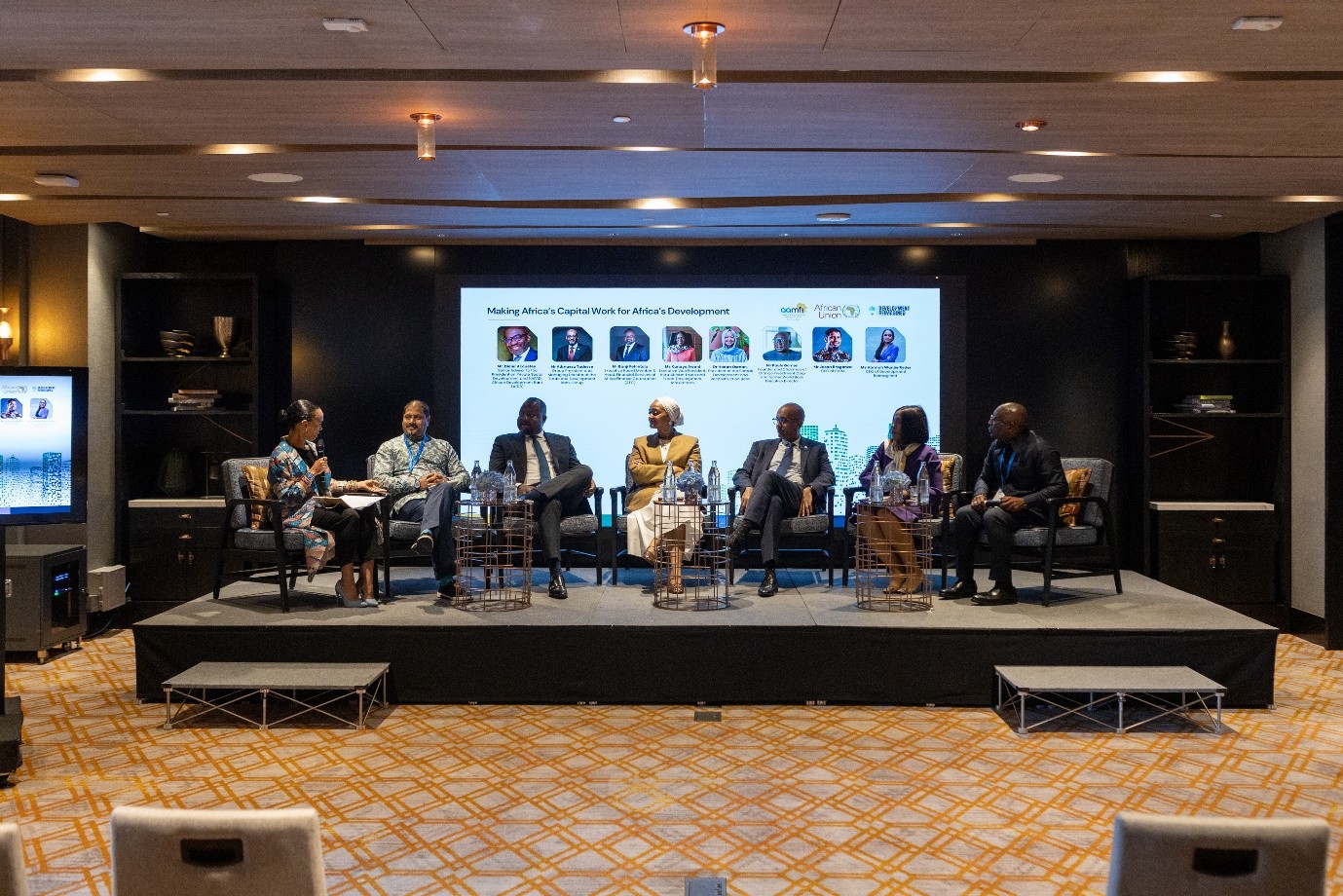
Ms Hannah Wanjie Ryder, Chief Executive Officer of Development Reimagined, moderated the panel discussion. Distinguished speakers included Mr Admassu Tadesse, Group President and Managing Director of the Trade and Development Bank Group (TDB), Ms Kanayo Awani, Executive Vice President, Intra-African Trade and Export Development, Afreximbank, Mr Banji Fehintola, Executive Board Member and Head of Financial Services at the Africa Finance Corporation (AFC), Dr Hodan Osman, President of the Somali Development and Reconstruction Bank, Mr Paulo Gomes, Founder and Chairman of Orango Investment Corp and former World Bank Executive Director, and Mr Jason Braganza, Chief Executive Officer at FIKRA. Dr Patrick Ndzana Olomo, Ag. Director of Economic Development, Integration and Trade and Head of Economic Policy and Sustainable Development at the African Union Commission, delivered the closing remarks.
Across the opening remarks, the panel, and the audience discussion, seven key messages stood out:
- Africa does not lack capital. The task is mobilising domestic savings and ending fragmentation. Institutions should work through complementarity and subsidiarity, and measure success in terms of resources mobilised, jobs created and champions built, as emphasised by Mr Didier Acouétey. The report points to the next steps: a US$1.5 billion African Infrastructure Financing Facility, a debt management programme and a proposed short-term liquidity facility, as presented by Mr Babajide Sodipo.
- African institutions need a voice in the global system. They can de-risk individual transactions, but not the wider ecosystem. As emphasised by Mr Admassu Tadesse, African lenders that step in first during debt stress should not be sidelined in later restructurings, and with better data on recoveries, amplified by the African Credit Rating Agency, perceptions of risk can be corrected.
- Responsible borrowing needs responsible lending. As emphasised by Mr Banji Fehintola, members should share early-warning information on rising country debt and agree on collective debt-capacity limits. Lenders must also do their own diligence, and Mr Jason Braganza stressed that responsibility runs both ways.
- Political commitment must be matched with capital. Governments should capitalise and pay their dues to the institutions they own, rather than leave them to absorb losses. As emphasised by Mr Jason Braganza, African institutions must be owned by Africans in practice, not just on paper.
- Finance whole sectors and treat African institutions as partners. As underscored by Dr Hodan Osman, Somalia’s sesame, dairy and fisheries sectors need a system around them, from seed quality to export infrastructure. She asked lenders to co-develop pipelines from the start rather than wait for “bankable” projects, a notion Mr Braganza said should be rethought.
- Equity, urgency and faster processes will unlock more capital. As emphasised by Mr Paulo Gomes, equity is the missing piece, and the pace of cooperation must match the urgency of the next crisis. Mr Fehintola explained how strategic equity can catalyse far larger funding despite the capital charge it carries. Ms Kanayo Awani called for harmonised due diligence and documentation.
- Stronger national DFIs, champions and trust are the way forward. Independent boards, diversified shareholding and external equity can strengthen national development finance institutions. Mr Paulo Gomes urged building regional champions, and Dr Patrick Olomo said trust is the foundation for making Africa’s capital work for Africa.
The video recording will be available here soon.

