

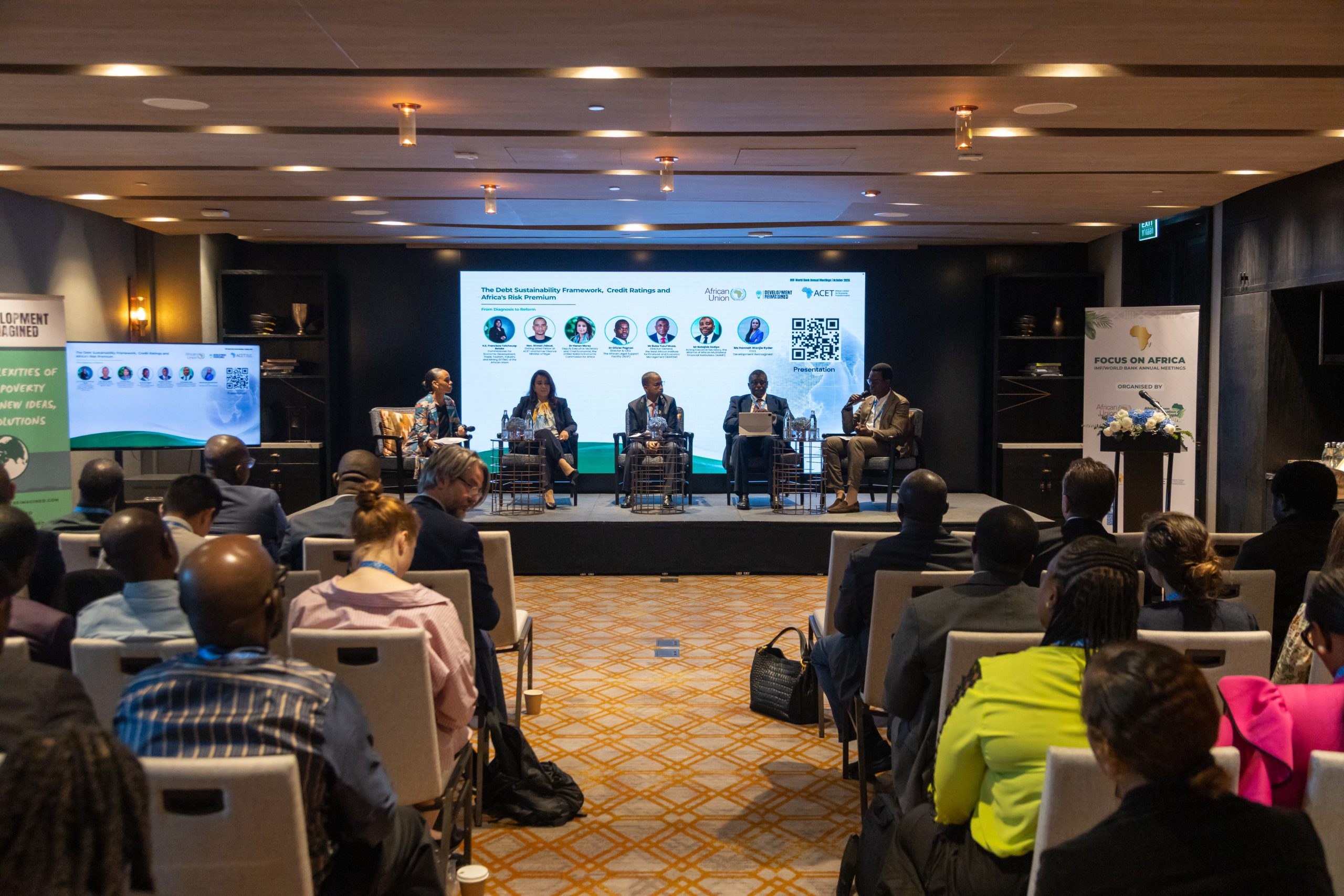
On 15th October 2026, on the sidelines of the IMF and World Bank Group Annual Meetings in Bangkok, the African Union (AU), Development Reimagined (DR) and the African Center for Economic Transformation (ACET) convened a high-level in-person panel discussion on “The Debt Sustainability Framework, Credit Ratings and Africa’s Risk Premium: From Diagnosis to Reform.” The session brought together policymakers, economists, and institutional leaders, moving from a diagnosis of Africa’s risk premium to a concrete discussion of what still needs to change in how sovereign debt sustainability and credit risk are assessed, following the September 2026 approval of reforms to the Low-Income Country Debt Sustainability Framework (LIC-DSF).
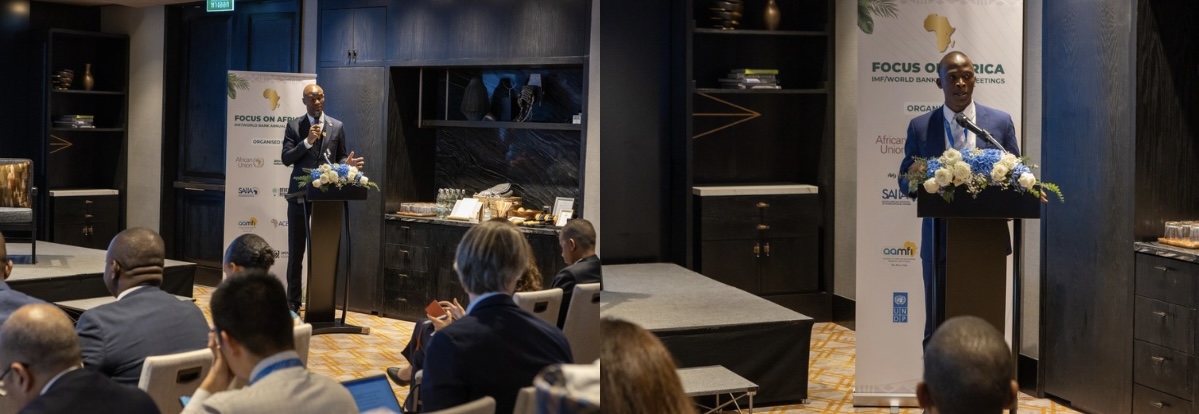
Dr. Patrick Ndzana Olomo, Ag. Director of Economic Development Integration and Trade and Head of Economic Policy and Sustainable Development at the African Union, delivered the opening remarks, followed by Mr. Trevor Lwere, Economist at Development Reimagined, who gave a presentation mapping the Common African Position on Debt against the approved reforms.
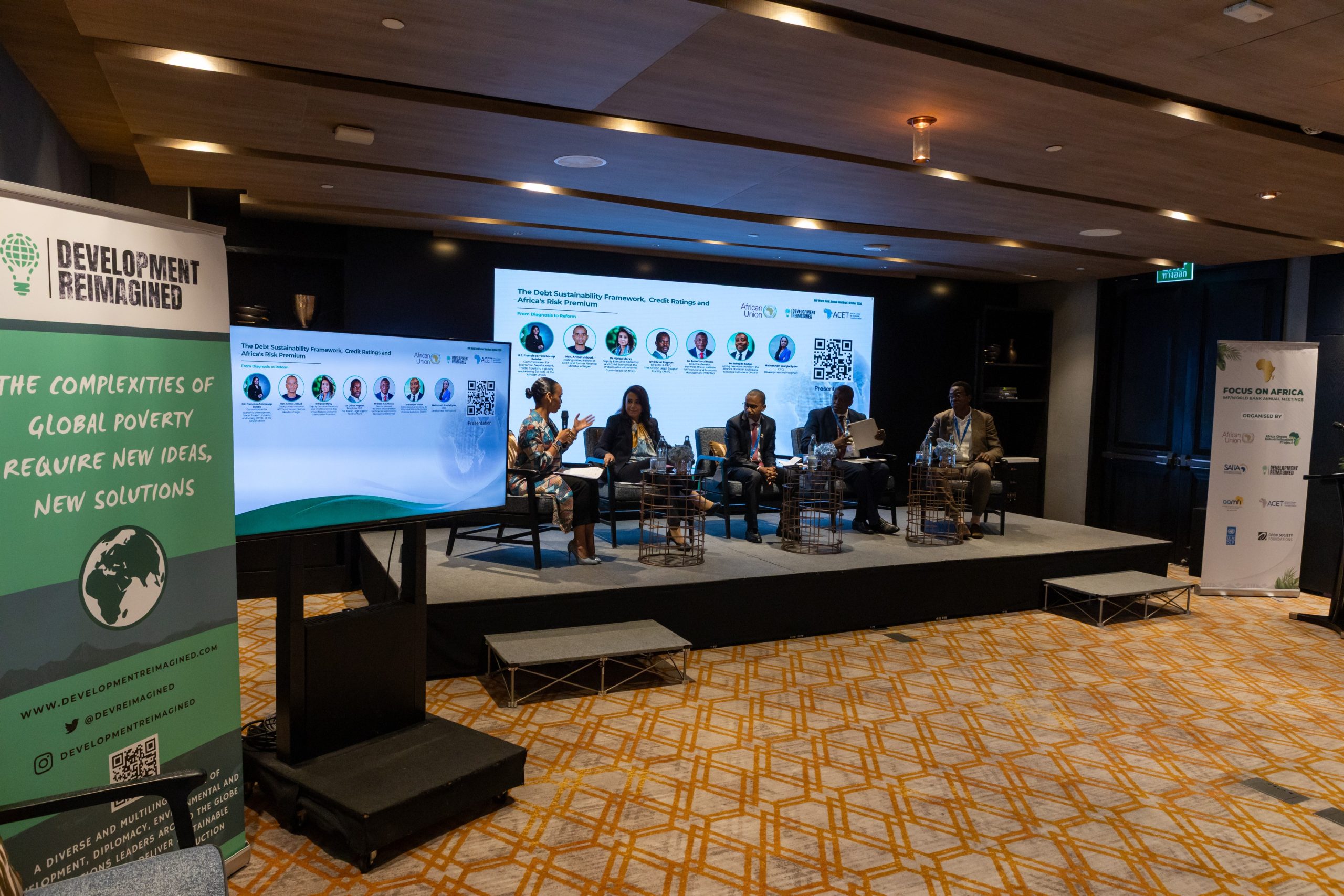
Ms. Hannah Wanjie Ryder, Chief Executive Officer of Development Reimagined, moderated the discussion. Distinguished panelists included Hon. Ahmat Jidoud, Distinguished Fellow at ACET and former Finance Minister for Niger, Dr. Olivier Pognon, Director and Chief Executive Officer of the African Legal Support Facility, Mr. Baba Yusuf Musa, Director-General of the West African Institute for Financial and Economic Management (WAIFEM), and Dr. Hanan Morsy, Deputy Executive Secretary and Chief Economist of the United Nations Economic Commission for Africa. Closing remarks were given by Mr. Babajide Sodipo, Acting Executive Secretary of the Alliance of African Multilateral Financial Institutions (AAMFI).
Below are five key takeaways from the panel discussion:
- The approved LIC-DSF reforms represent meaningful progress but still fall short of what Africa needs. Panelists generally rated the reforms at around six out of ten. Mr. Trevor Lwere highlighted that despite improvements in the reforms, such as differentiation between debt sustainability and debt stress, the introduction of new liquidity indicators, including gross financing needs, and the provision of more information on the timing and type of risks, only partially address the long-standing African concerns about not penalising prudent debt management and ensuring better reflection of country-specific circumstances.
- Debt used for productive investment must be treated differently from debt used to finance consumption of interest payments. Panelists noted that the framework still lacks adequate recognition of the quality and use of debt. Dr. Hanan Morsy emphasised that not all debt is equal, and yet the current assessments largely treat all debt the same. Additionally, Hon. Ahmat Jidoud reinforced the need to supplement the DSF with transparent feasibility analysis that captures future value streams and assets, not only liabilities.
- Greater transparency on models, assumptions, and judgements remains essential. It was noted that subjectivity in debt-carrying-capacity assessments and limited visibility into the ‘cooking machine’ behind the DSF continue to undermine credibility. As emphasised by Mr. Baba Yusuf Musa and Dr. Olivier Pognon, countries need clearer documentation of how assessments and determinations are reached so they can understand, challenge, and improve the analysis.
- The need for stronger country-level data, technical capacity, and joint ownership of debt sustainability analyses. A strong consensus emerged around country-level agency, with panelists highlighting the need for African governments to take ownership of their own DSAs. Additionally, it was noted that reliable, timely national data systems, stronger technical expertise within debt management units, institutional continuity, and peer learning are prerequisites for more accurate assessments and better negotiation outcomes.
- The near-term opportunity lies in shaping the guidance note, while AfCRA and stronger African financing capacity offer longer-term levers. Panelists noted that the guidance note for country officers that is meant to be developed through mid-2027 provides an immediate window to influence how the approved reforms are applied. In addition, panelists added that the newly launched African Credit Rating Agency’s (AfCRA) credibility will depend on rigorous, transparent, and comparable methodologies rather than favourable ratings.
Mr. Babajide Sodipo closed the discussion by calling for growth and productive investment to be placed at the center of debt sustainability assessments, alongside stronger African financing capacity and greater practical cooperation among African institutions and partners.
The discussion confirmed that Africa seeks fair and accurate assessment grounded in economic realities, not preferential treatment. A reimagined African Debt Architecture, grounded in long-term asset generation, more accurate and development-oriented risk assessment, and stronger African agency, remains essential.

