As African nations continue to grapple with severe debt pressures, global financial volatility, and high borrowing costs, strategic debt coordination has risen to the top of the continent’s economic agenda. Highlighting this priority, African leaders at the African Union Summit endorsed key recommendations for strengthening borrower coordination and advancing the Common African Position on Debt.
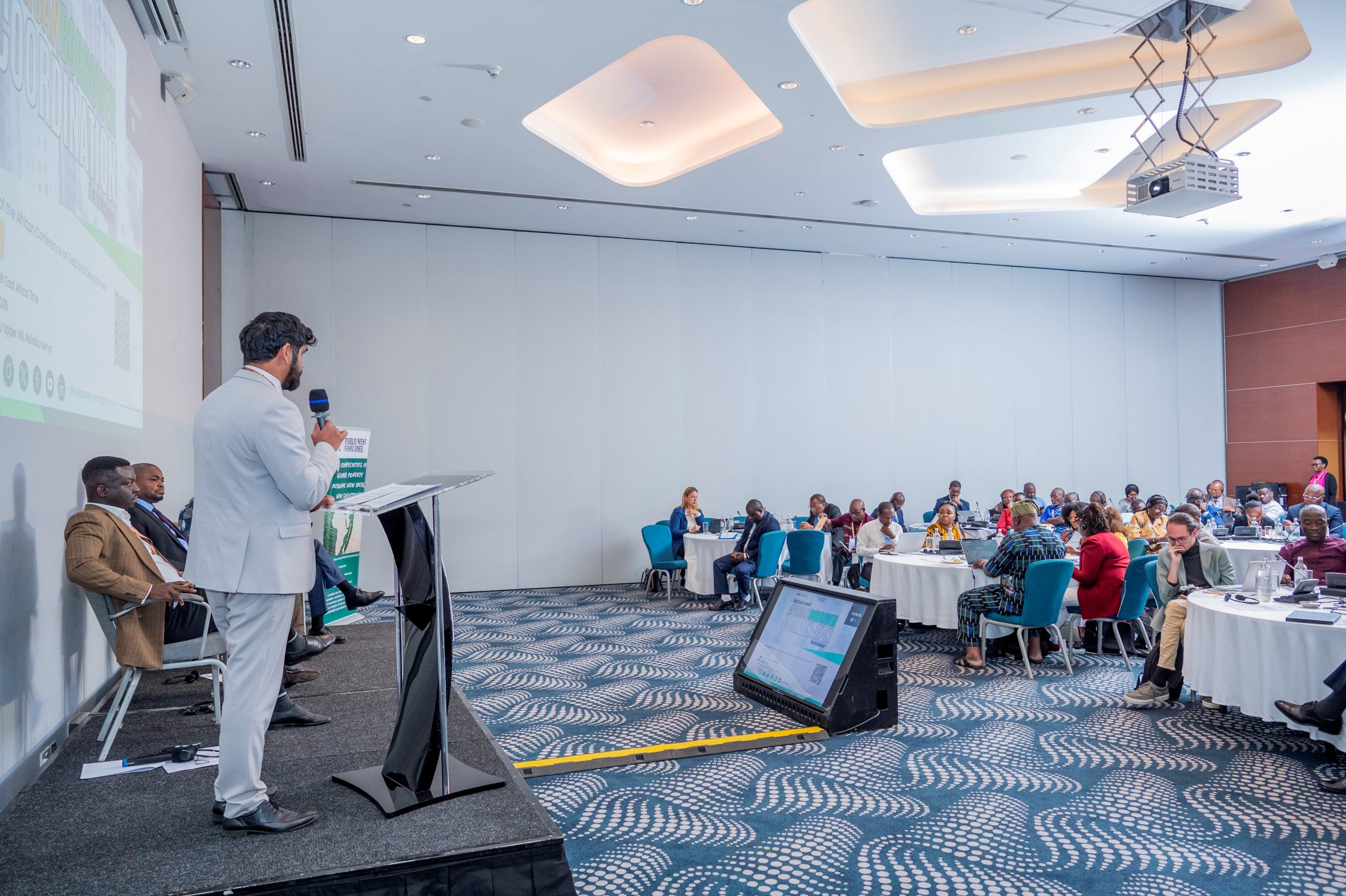
To move these recommendations from political endorsement to practical implementation, on the 27th of August 2026, Development Reimagined, alongside the African Centre for Economic Transformation (ACET) and AfriCatalyst, convened a panel discussion at the 6th African Conference on Debt and Development, titled “What exactly should African Borrower Coordination aim to achieve?”
This event brought together policymakers, economic experts, and civil society leaders to examine how African countries can move beyond the principle of coordination toward practical mechanisms that deliver greater influence over borrowing terms, debt restructuring, and the rules of the international financial system. The event builds on the joint research report by Development Reimagined, AfriCatalyst, and the African Center for Economic Transformation (ACET) titled “Advancing African Agency through Borrower Coordination,” which identified 32 existing borrower coordination initiatives across the continent.

In her opening remarks, Ms. Ivory Kairo, Decolonising Development Programme Manager at Development Reimagined, set the stage by addressing the fundamental purpose of borrower coordination, framing it not as an end, but as a mechanism to shift global financial power dynamics. She highlighted that while creditors have maintained organised structures like the Paris Club since the 1950s, African nations have historically engaged creditors in isolated silos, missing out on collective bargaining leverage. She emphasised the need for having fairer collective debt restructuring, acceptable benchmark terms for new financing, and systemic knowledge-sharing among debt managers, arguing that coordination should enable African agency to redesign systems rather than merely navigate them.
The distinguished panel discussion was moderated by Mr. Tumba Tshimanga, Advocacy Lead at ACET. The panel featured a great lineup of speakers, including Mr. Paul Nondo Sikazwe, Technical Advisor on Public Debt at the African Union Commission, Mr. Africa Kiiza, Pan-African Advocacy and Policy Lead at Christian Aid, Dr. Frank Adu, Senior Economist at ACET, Mr. Daniel Ndolo, Director General of Public Debt Management at the National Treasury of Kenya, and Mr. Pratik Patel, Bureau Chief for East and Southern Africa at AfriCatalyst.

Building on the imperative for institutional alignment, Mr. Paul Nondo Sikazwe detailed the AU’s operational efforts to turn high-level political declarations into technical cohesion through the newly established AU Directors of Debt Management Offices Network. He outlined key AU priorities, including the development of unified African baseline term sheets, reforming the IMF/WBG Debt Sustainability Framework to focus on long-term economic growth rather than short-term liquidity, and establishing early-warning guidelines to address liquidity shocks preemptively.
From a civil society perspective, Mr. Africa Kiiza underscored the structural inequalities of the global financial architecture, where African nations face higher borrowing costs and foreign exchange penalties. He emphasized that borrower platforms must drive transparency and accountability, calling on civil society organisations, parliamentarians and trade unions to actively lobby governments to join unified platforms, moving away from fragmentation.
Translating high-level policy into debt desk management, Mr. Daniel Ndolo, highlighted the need for a standardised ‘Borrowers Rule Book’ similar to the OECD creditor guidelines, emphasising that African borrowers must establish firm parameters around acceptable discount factors, interest gaps, and grant elements while actively developing local-currency regional debt markets to mitigate foreign exchange risks.
Concluding the panel perspectives, Dr. Frank Adu insisted that borrower coordination mechanisms must be African-led, African-moved, and African-financed, calling for concrete operational outcomes including building a shared reference repository of best-practice negotiation terms from recent debt restructuring processes like Zambia’s case, establishing formal institutional ownership to maintain these resources, and setting clear near-term negotiation targets.
Below are the key takeaways from the discussion:
- African borrower coordination must aim directly at building structural bargaining power to influence borrowing terms, access to finance, and debt restructuring conditions.
- Borrower Platforms must shift African debt management away from post-crisis debt workouts toward baseline standardised term sheets, early-warning liquidity mechanisms, and growth-oriented debt sustainability metrics.
- Need to establish a standardised African ‘Borrowers Rule Book’ that’ll help set fair thresholds for interest caps, discount factors, and grant elements across future debt agreements.
- Need to develop robust local-currency and regional debt markets to reduce exposure to foreign exchange volatility and sovereign risks.
- African countries must formally own and maintain unified negotiation repositories so that incoming negotiators build directly on past precedents.

Ultimately, the event successfully reframed the continental discussion on borrower coordination, shifting it from an abstract ambition into a concrete, goal-focused strategy centered on technical execution and structural bargaining power. By establishing clear parameters around negotiation tools, shared intelligence, and standard rulebooks, the session provided a practical roadmap for operationalising the Common African Position on Debt (CAP) and ensuring African countries command genuine agency on the global stage.