

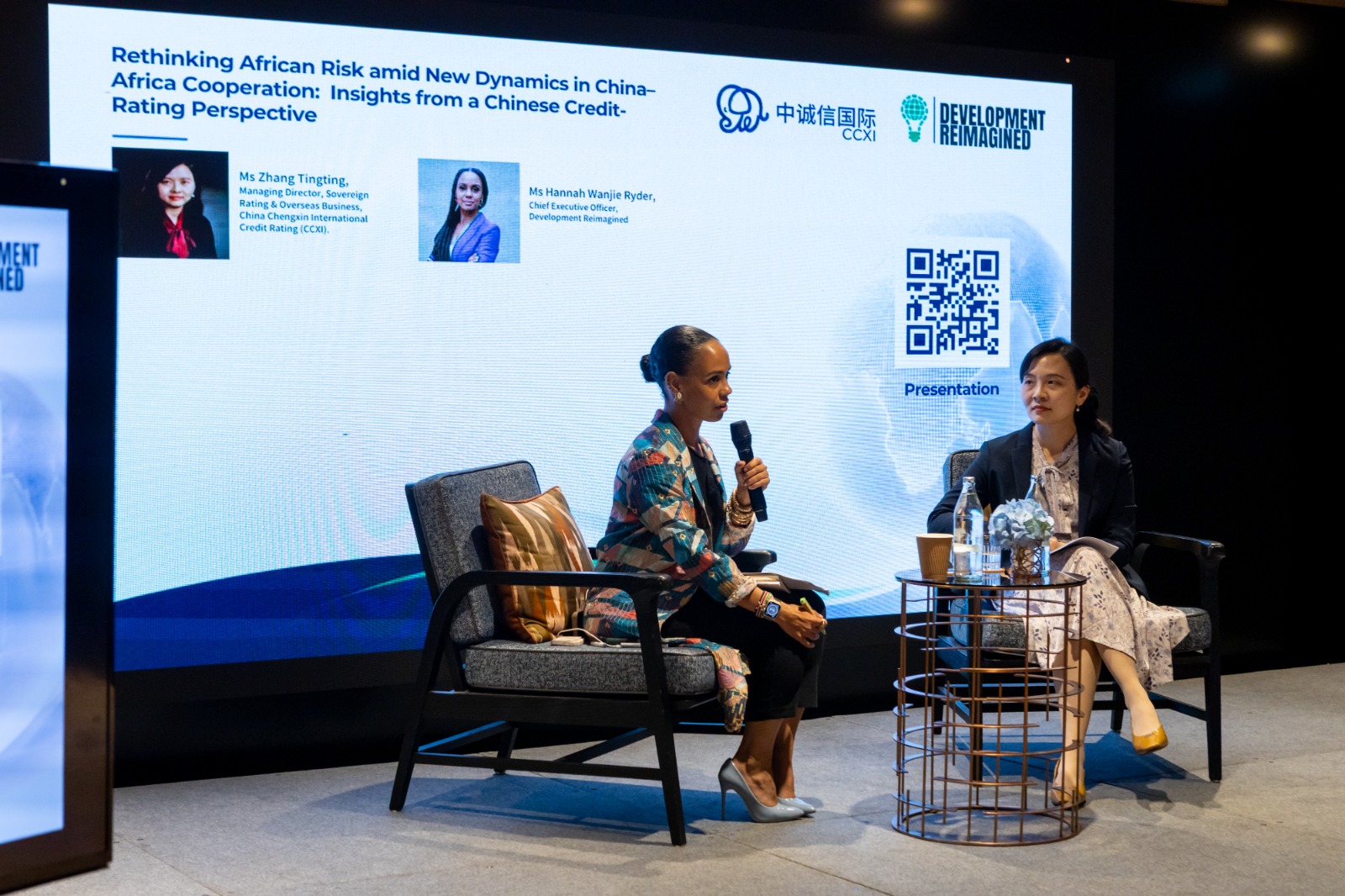
On 15 October 2026, on the sidelines of the IMF and World Bank Annual Meetings in Bangkok, Development Reimagined and China Chengxin International Credit Rating (CCXI) hosted a fireside chat titled “Rethinking African risk amid new dynamics in China–Africa cooperation: Insights from a Chinese credit-rating perspective.” The conversation drew on CCXI’s Africa Regional Risk Outlook and examined how African sovereign and investment risks are assessed from a Chinese country-risk perspective, as well as how deepening trade, investment and financing ties with China, including the growing use of the Renminbi (RMB), are shaping the cost and availability of capital for African economies.
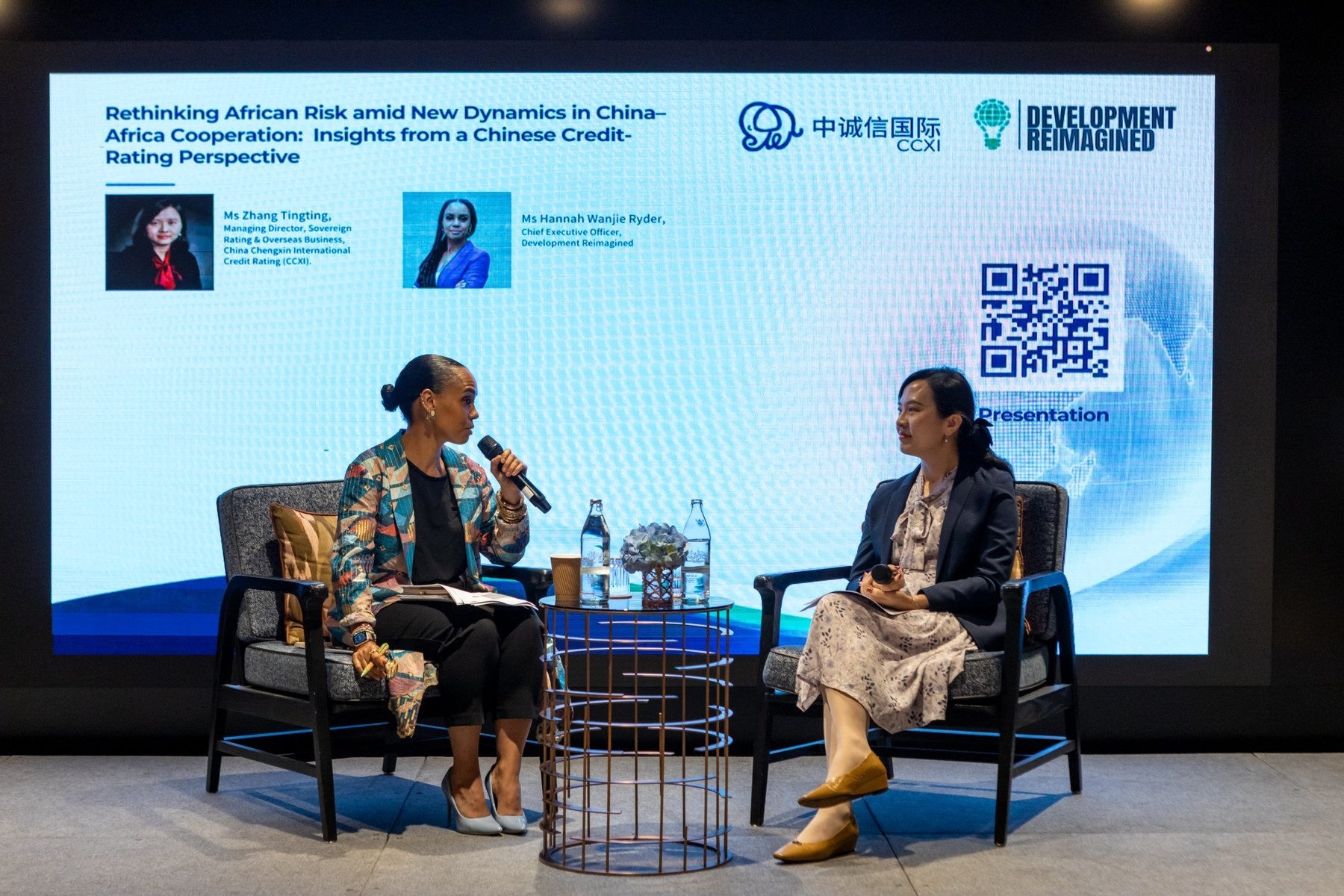
Ms Zhang Tingting, Managing Director, Sovereign and International Rating at China Chengxin International Rating (CCXI), participated in the fireside conversation with Ms Hannah Wanjie Ryder, Chief Executive Officer of Development Reimagined, who moderated the discussion.
Across the conversation, five key messages stood out:
- RMB settlement and RMB financing reinforce one another. This was the central message of the report. Wider use of the RMB in trade settlement creates demand that in turn supports RMB lending and bond issuance. This diversifies financing away from dollar borrowing, lowers currency mismatch and conversion costs where RMB revenues match RMB liabilities, and deepens trade and investment with China. Ms. Zhang Tingting highlighted that Panda bond issuance has been growing quickly on low RMB rates, with AAA-rated issuers averaging around 8% in 2026, which she noted was cheaper than dollar funding even after hedging. The condition is infrastructure: without an RMB clearing arrangement in an African country, the currency is slower and costlier to use, and this particularly benefits South Africa and Egypt, where RMB receipts, financing access, domestic recycling and currency swap lines are already usable.
- A country-risk lens reads African markets more favourably than sovereign ratings do. CCXI assesses country risk rather than sovereign creditworthiness. Its investment-oriented framework is built around the three questions that companies ask before entering a market: is it attractive, is it stable, and does the financial system work? As emphasised by Ms. Tingting, this weighs economic strength, political risk, and the financial sector over fiscal sustainability. The African countries in CCXI’s sample average three on a scale of one to seven, where higher scores mean lower risk. That is a higher-risk group overall, but a better reading than the B+ to BB- sovereign ratings the same countries carry. South Africa and Morocco receive the highest scores. The sample covers only countries CCXI already rates, so it skews towards stronger credits.
- Governance, more than the economic cycle, separates African markets from one another. As emphasised by Ms. Zhang Tingting, near-term cyclical pressure coexists with a strengthening structural foundation. Political and security risk is the greatest source of differentiation, followed by the link between foreign exchange, inflation and debt, where foreign-currency borrowing and short maturities keep rollover pressure alive, and by financial sectors characterised by uneven liquidity buffers, shallow capital markets and maturing regulation. Against these, growth is holding up in less commodity-reliant economies, inflation is falling, debt restructurings are advancing, and reserves are rebuilding.
- Long-term growth potential is scored separately, and four countries gain from it. Beyond diversification, CCXI weighs three forward-looking drivers: infrastructure investment, which Ms Zhang called the clearest route to long-term growth; the demographic dividend, a tailwind only where education and employment opportunities translate a young, urbanising workforce into higher productivity; and institutional quality, covering policy predictability, rule of law, governance effectiveness and environmental, social and governance (ESG) frameworks. On this basis, Morocco, Côte d’Ivoire, Kenya and Tanzania received upward adjustments.
- African multilateral institutions are the bridge, and better data would widen it. As emphasised by Ms Zhang, multilateral development banks can enter China’s bond market on the strength of their own credit ratings, extend guarantees to borrowers with weaker standing, and use their regional expertise to close the information gap that limits Chinese investors’ familiarity with African markets. Ms. Zhang called for more African multilateral development banks to issue Panda bonds at scale. For sovereigns, the binding constraint is data. CCXI is calling for globally recognised indicators of institutional quality and pointed towards future cooperation with the African Credit Rating Agency.
Watch the full video:

