

Date Published: September 2026
Africa’s long-term development ambitions rest on more than financing from the international financial system alone. For over three decades, a parallel vision has been taking shape: a set of African-owned, African-led institutions designed to give the continent its own investment bank, monetary fund, capital markets network, and eventually a central bank and single currency.
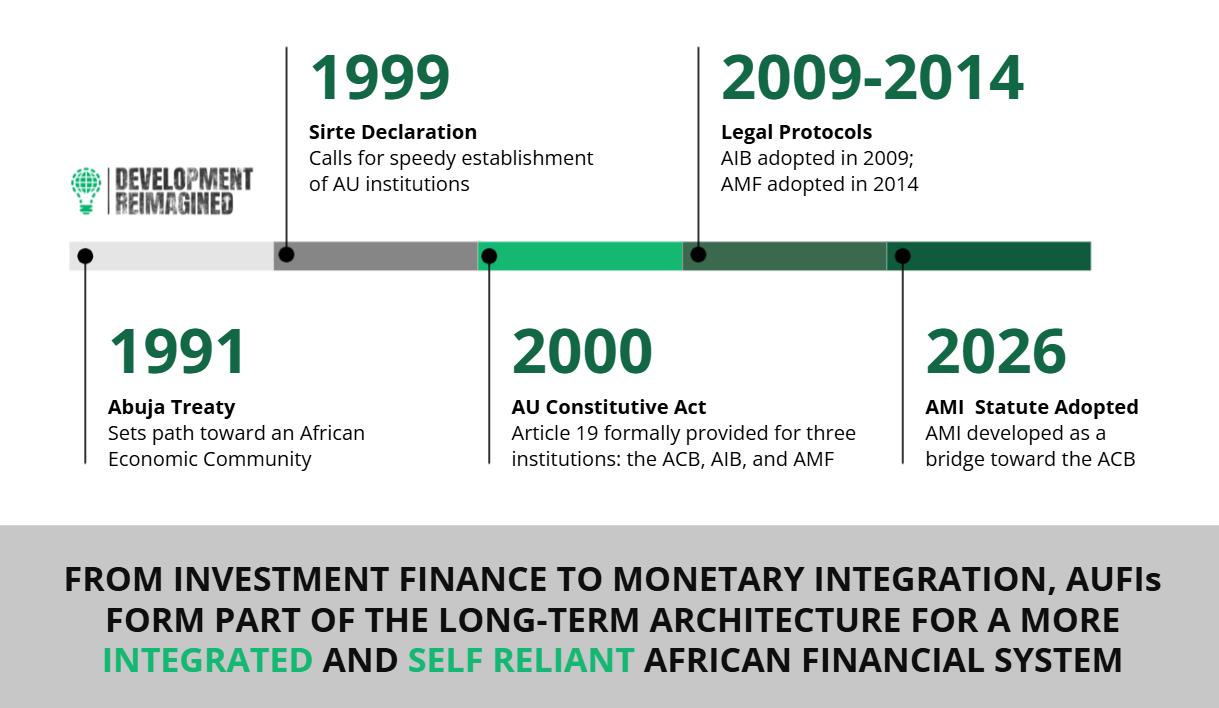
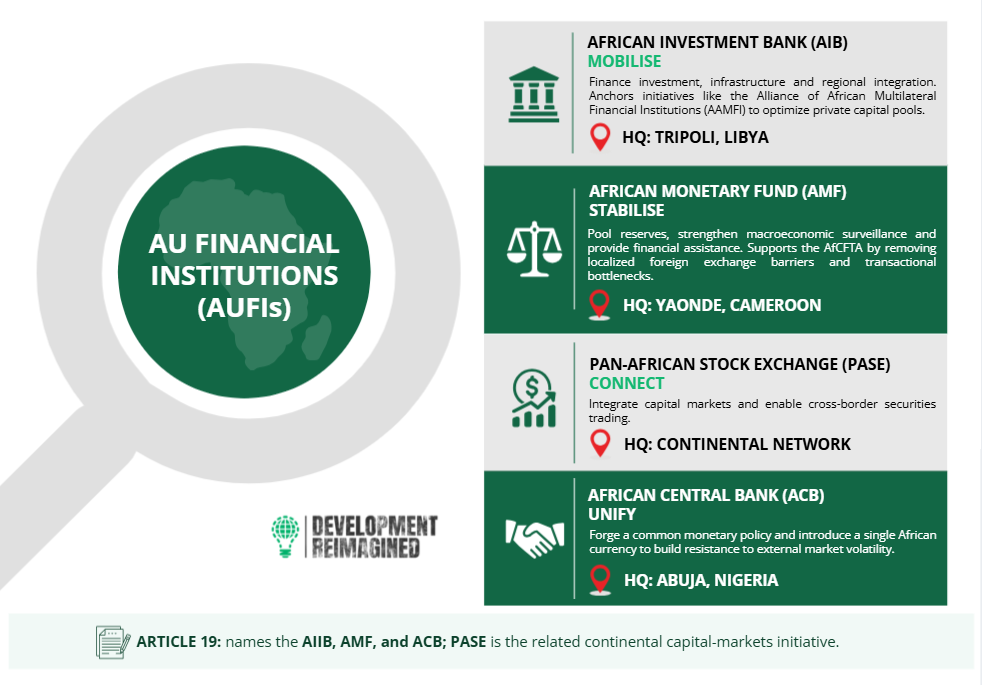
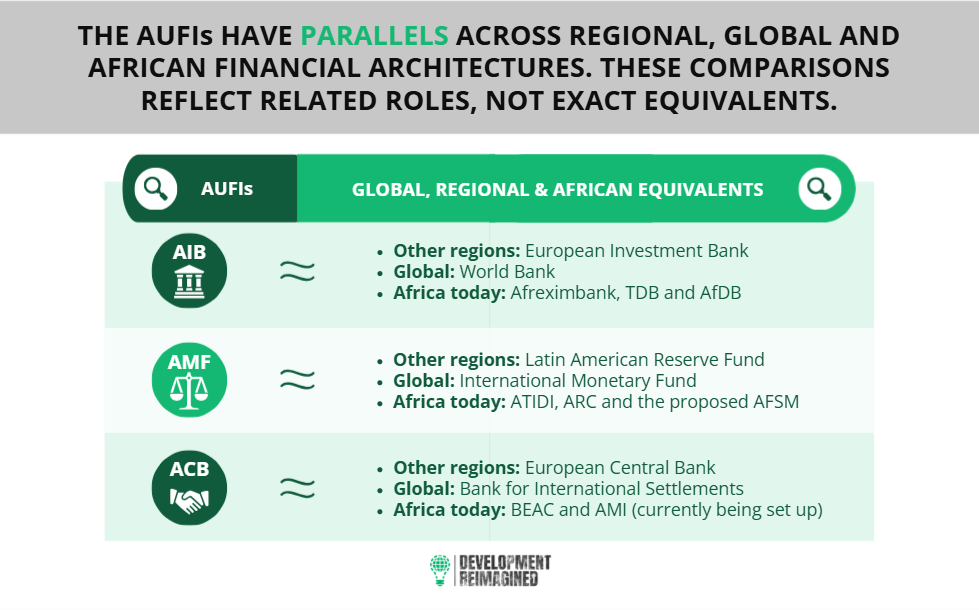
Article 19 of the 2000 AU Constitutive Act provides for the creation of three African Union Financial Institutions (AUFIs):
- The African Investment Bank (AIB),
- The African Monetary Fund (AMF),
- The African Central Bank (ACB).
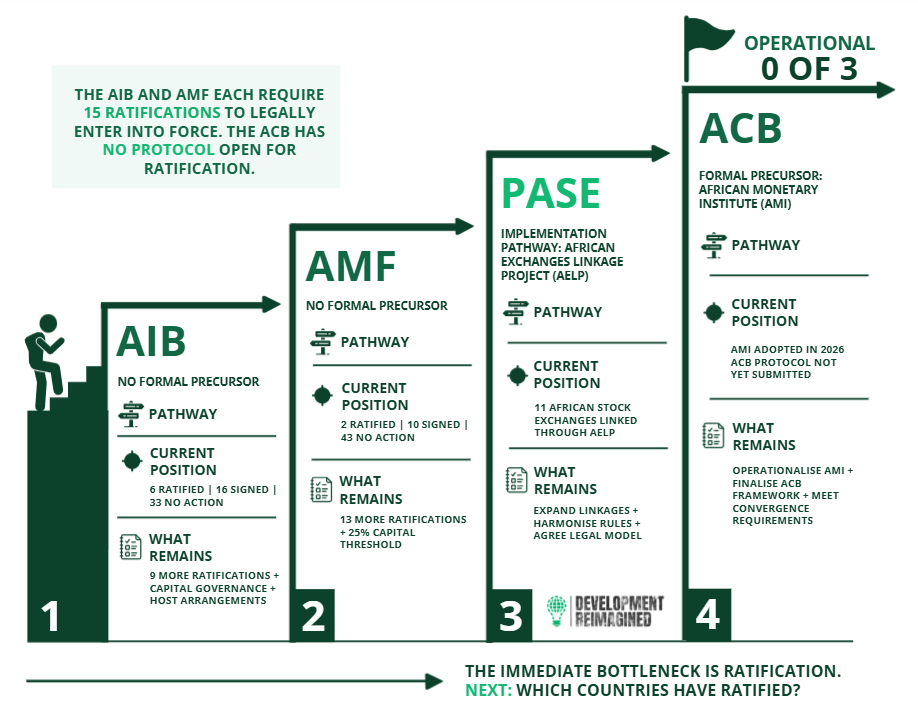
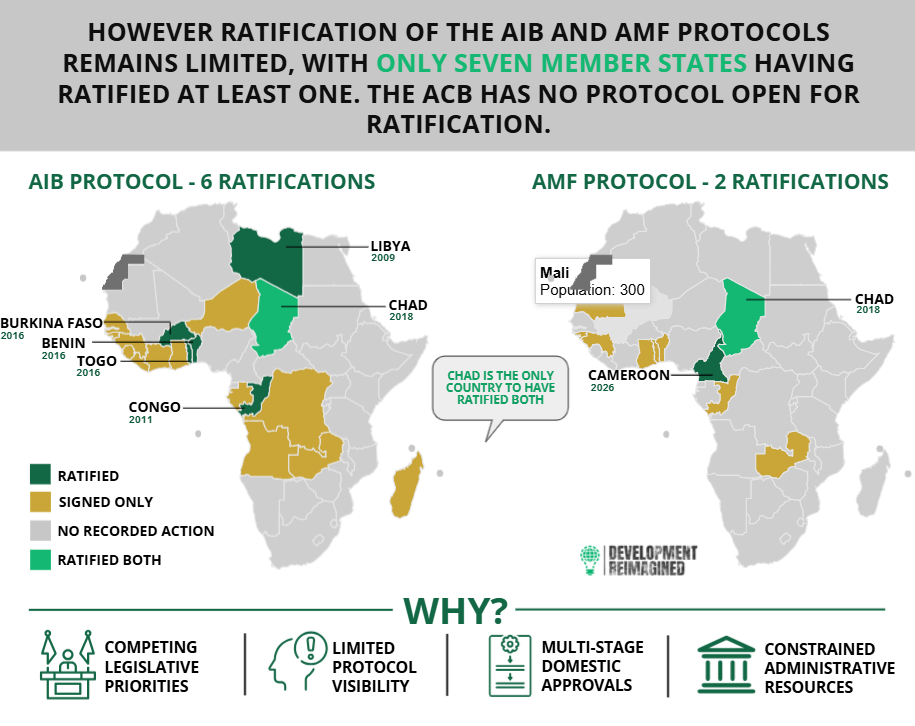
The broader AU financial architecture also includes the proposed Pan-African Stock Exchange (PASE), an Agenda 2063 initiative intended to support the integration of African capital markets. Legal protocols for the AIB and AMF were adopted between 2009 and 2014, and in 2026 the African Monetary Institute (AMI) was adopted as the formal precursor intended to support progress towards the ACB.
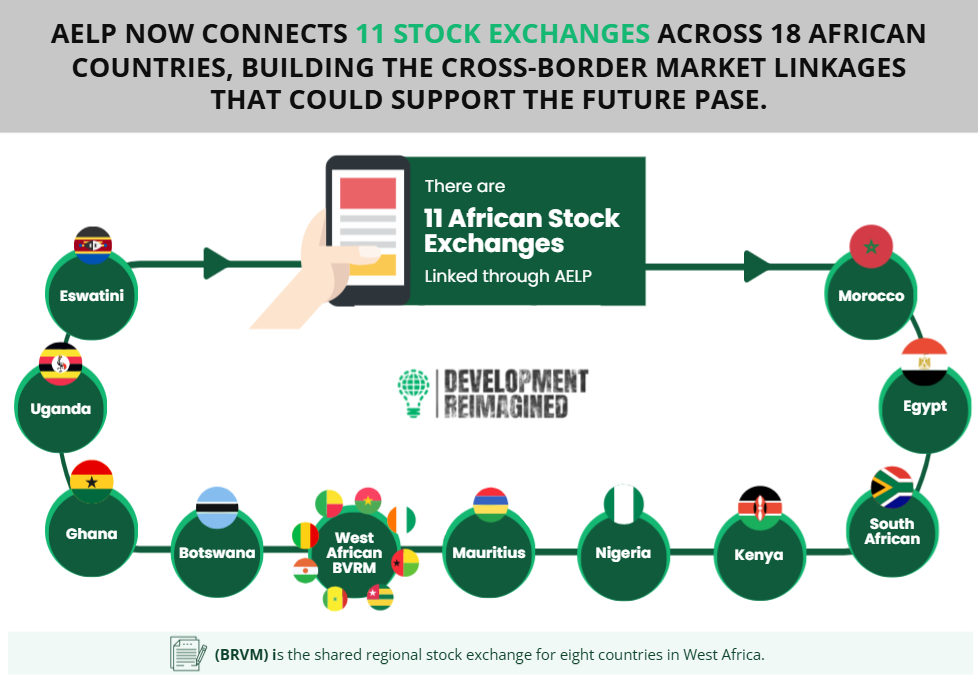
Over the past three decades, the AUFI agenda has moved from declaration to legal protocol to partial ratification, with the AIB and AMF protocols pending further ratifications, and the African Exchanges Linkage Project (AELP) already linking eleven African exchanges toward PASE. Yet that progress has not translated into completed institutions: none of the three AUFIs are operational, and momentum has repeatedly stalled at the ratification stage.
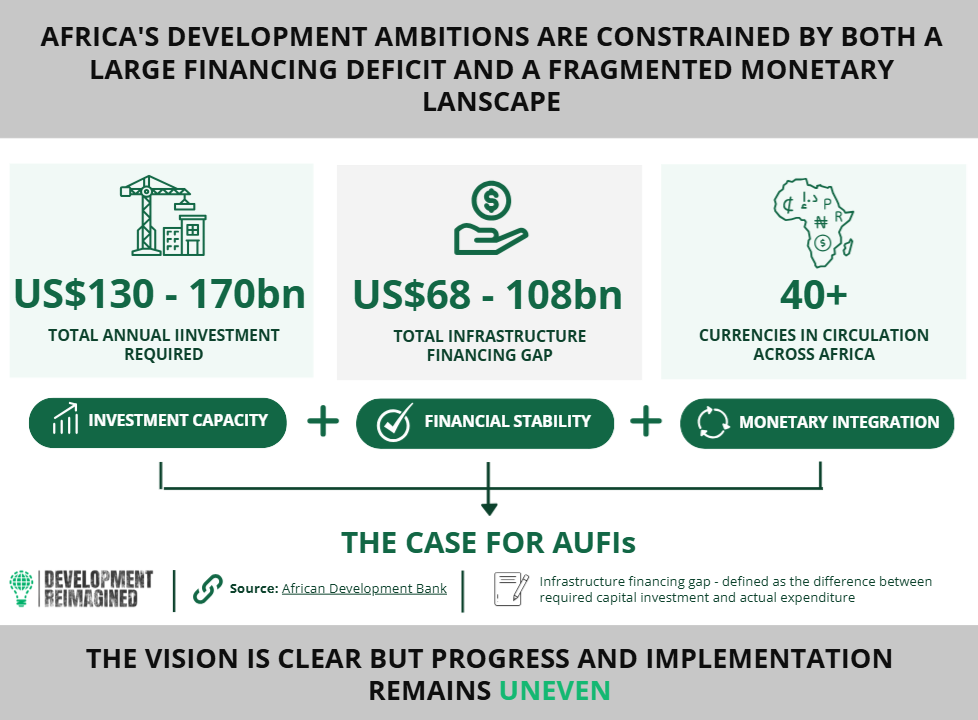
At Development Reimagined, we see this as unfinished business. The data shows real, albeit uneven, progress, and a clear rationale for why AUFIs matter: Africa faces an annual infrastructure financing need of US$130–170 billion against an annual financing gap of US$68–108 billion, spread across 40+ currencies in circulation continent-wide. Closing that gap requires investment capacity, financial stability, and monetary integration working together, which only a completed AUFI architecture can deliver at continental scale.
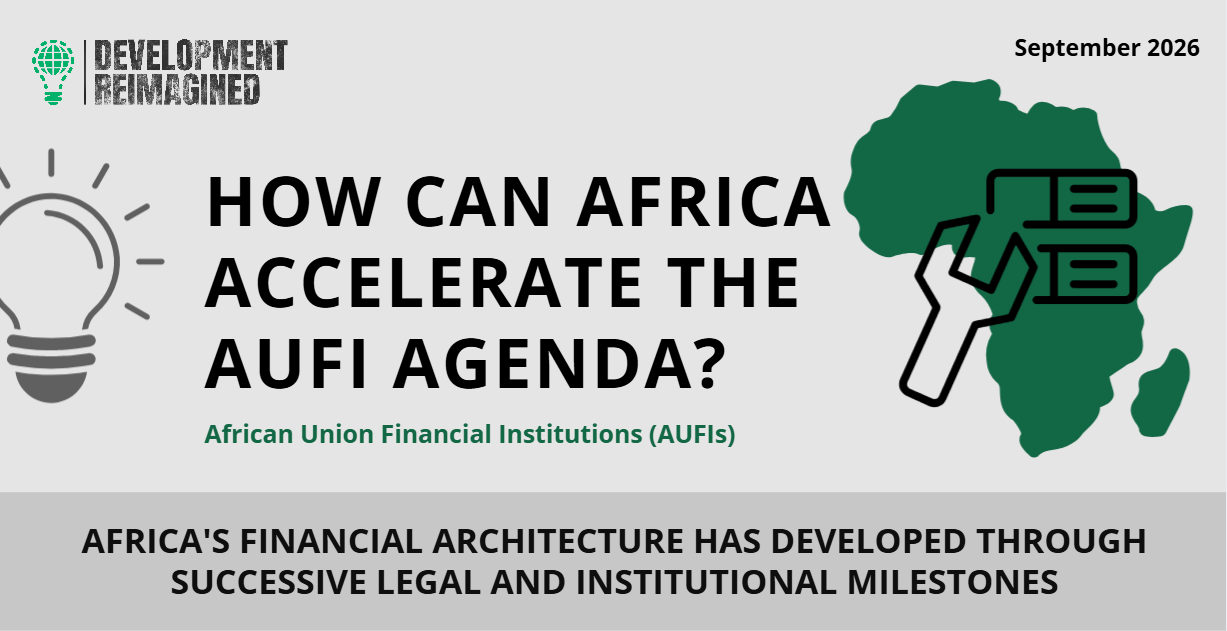
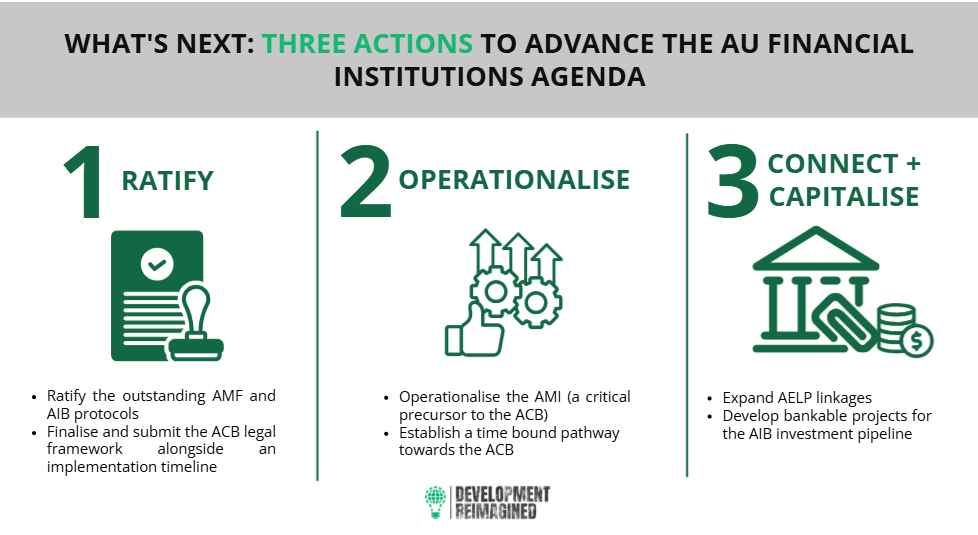
So what next? Our infographic puts forward three key actions:
- Ratify the outstanding AMF and AIB protocols and finalise the legal framework and roadmap for the ACB,
- Operationalise the African Monetary Institute (AMI) as the critical precursor to the ACB, and finalise the ACB protocol roadmap,
- Connect and capitalise by expanding AELP linkages and developing bankable projects for the AIB investment pipeline,
At Development Reimagined, we are dedicated to transforming the global conversation on development by expanding the reach of innovative perspectives that put Africa first. We welcome and permit you and your media organisation to quote, link to, and/or comment on our research reports and visual analytics on your organisation’s website or social media posts under the condition that you provide proper attribution including reference by name to Development Reimagined and a link to the source on the DR website, for any text, charts, images, or other DR content you use.
To find out how Development Reimagined can support you, your organisation or Government to review key economic policies, please email the team at clients@developmentreimagined.com.
Special thanks go to Kezia Boateng for her work on the graphics and the underlying research that informed this infographic. Data was drawn from the African Development Bank, the African Union Commission (including the Joint 9th Session of the STC on Finance, Monetary Affairs, Economic Planning and Integration, Abdijan, July 2026) and AUDA-NEPAD.

